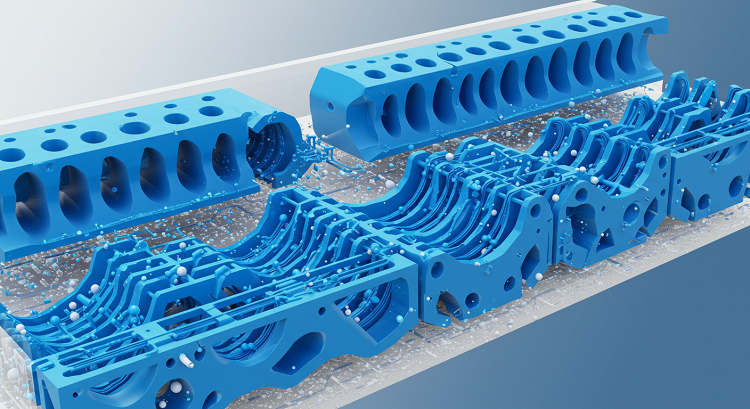
Airflow efficiency is an important factor in the effectiveness of any air conditioning or cooling system. The way the air passes through the heat exchanger directly affects the heat transfer rate, pressure drop, and energy consumption of the system. Traditional finned tube coils have been the standard for decades, but their inherent design limitations – especially regarding airflow resistance and uneven distribution – can reduce maximum performance. Microchannel heat exchangers, on the contrary, are designed in such a way as to directly solve these problems, providing better airflow dynamics, which leads to a real increase in efficiency.
One of the key reasons why microchannel coils are superior to traditional ones is their internal design. Instead of cylindrical copper tubes with aluminum fins spaced apart, microchannel technology uses flat multi-channel aluminum tubes with precisely designed fin patterns. This configuration reduces air resistance while maintaining the maximum effective surface area for heat transfer. As a result, a more uniform air flow is provided throughout the coil, which increases thermal performance without increasing fan power.
The advantages of this design are particularly evident in roof equipment, split systems, and integrated air conditioning systems, where limited space inevitably leads to compact coil configurations. Microchannel heat exchangers in these systems ensure uniform air flow even in compact environments, eliminating hot spots, temperature stratification, and unnecessary cooling cycles.
In addition to the pipe arrangement, the fin design also plays an important role in optimizing airflow efficiency. Modern microchannel coils use advanced louvered and corrugated structures that provide improved airflow through the coil system. This not only reduces turbulence, but also increases the rate of heat absorption and dissipation due to the smooth contact of the coil surface with the air.
Other models use variable fin spacing to provide different air speeds, allowing engineers to adjust performance to meet the specific requirements of the system. For example, in systems with high static pressure, such as VAV systems or industrial process cooling, a more compact fin spacing ensures heat transfer while minimizing the use of fan energy. Conversely, lower density designs are suitable for applications that require noise reduction and convenient cleaning.
This customization contributes to better system integration and ensures that each replacement of carrier microchannel coils provides the required performance and energy savings. Managers of enterprises replacing copper-aluminum coils of previous generations often note a lower compressor speed and reduced fan energy consumption — both of these advantages are the result of improved airflow control.
Reduction of differential pressure and load in the system
Another important advantage of the microchannel design is its effect on the pressure drop in the coil. Traditional coils create higher resistance due to the winding flow paths and large obstacles in the tubular-ribbed matrix. This pressure prolongs the operation of the fans over time, as a result of which they consume more energy and have a shorter service life of the components.
Microchannel heat exchangers solve this problem by providing a smoother and laminar air flow. Due to fewer interruptions and a less enclosed design, air passes through the coil with less resistance. This not only increases the efficiency of the system, but also minimizes the mechanical stress on the fans and motors, which increases service life and reduces maintenance costs.
For technicians working with older Carrier installations, replacing old coils with new carrier microchannel coil replacement equipment can significantly improve airflow efficiency without requiring significant changes to the original system. Most upgrade kits are of the size of the original equipment, which makes it possible to take full advantage of the microchannel system.
In short, the contribution of the microchannel design to improving airflow efficiency should not be underestimated. The ideal geometry of the fins, reduced pressure drop and increased heat transfer – all these innovations have a direct impact on reducing energy consumption, reducing noise levels and extending the service life of the system. The introduction of microchannel technology both within the new system and during the modernization of the existing one is a reasonable investment in creating more intelligent and efficient air conditioning and cooling systems.